Showing posts with label Pia Mellody. Show all posts

Thursday, 23 February 2017

Clinical books I have come to find essential for recovery


John Lee, writer and counselor, asked me for any books I would recommend that I have read of late, it got me thinking, and here are some. The re are many more, but I had to start somewhere....


Complex PTSD. From Surviving to Thriving. Pete Walker.
This book is my go to book for Developmental Trauma. Its conversational representation on Co-dependent recovery with modern easy to apply Trauma regulation techniques makes it a therapist and recovering person’s best friend. 13 tips to deal with your Emotional Flashbacks, how to tame your Inner Critic, What trauma type are you? all break it down and make it simple to understand and give clear achievable direction.

The Polyvagal Theory. Stephen Porges.
Stephen had me from the first lecture. His Masterless gave me faith in the term, and this book brings it all together in a nice take home package, for clinicians, and recovering people. When you have lived through trauma, and are left with the confusion about your own reality, and bewilderment when you are activated and then have your trauma reaction happen to you, then there is real relief in knowing not only what’s happening inside your nervous system, but also what was the specific damage and ongoing impact from your child hood trauma. Information (insight) is power, and this book is a powerful resource.

The Science and Art of Psychotherapy. Allan N. Schore
Sex Addiction specialist Alexandra Katehakis once described attending a master class by Allan as “I don’t know what I just heard but I know I am on fire!” It put into words my experience of Allan Schore. His lifetimes work has been tracking the impact of trauma on the developing Brain and how this effects a client s ongoing life development, as well as informing clinical practice on effective and efficient clinical interventions.

Pocket Guide to Interpersonal Neurobiology. Daniel J. Siegel
I could put all of Dan’s books on this list. All are amazing resources. The Mindful Therapist - direct guidance to create right brain to right brain connection in therapy, leading to a dynamic therapeutic alliance. Parenting from the Inside Out - guiding parents to interrupt the ongoing generational trauma. This book however is a wonderful guide to understanding the terms, concepts and phrases that have arrived from the school of the Interpersonal Neurobiological reign, in what seems overnight. Dan along with the likes of Schore, Porges, Levine, Kolk, Ogden, Hughes and Tronick to name a few have accelerated the way we understand and treat trauma. This book therefore is a must have in any therapist library.

Breaking Free- Pia Mellody.
This workbook, written in 1989, to accompany her ground breaking text Facing Codependence, was light years ahead of its time, and is still my go to developmental trauma information gathering text. I still run groups based on it and use it in one on one sessions to as Dan Siegel says “Get your History straight!” It looks at what happened to you, how that then sabotages your life and relationships, and finished with skill building exercises to counteract the damage. Brilliant.

Neurobiology Essentials for Clinicians. Arlene Montgomery.
This book, forwarded by Shore, is a helpful, case studied approach to guide therapist to take the new brain based information and bring in into the therapy sessions. I poured through it, and loved how it weaved an easy to understand and follow pathway to help me really be a trauma informed therapist.

In an Unspoken Voice. Peter A Levine.
Like Siegel and Schore, anything by Levine is an asset to a therapist bookshelf. His Somatic Experiencing model, and the way it tracks trauma in the nervous system and the body, allowing therapists to work from the bottom of the brain up, as well as the top of the brain down was so useful to me. I also love How to Trauma Proof your Kids as well, but as I said, any book by Peter is gold in a therapists hands.

Facing Addiction. Patrick Carnes
Patrick Carnes is simply one of the best addiction writers of our times and the workbook resources he has created for therapists to use with clients are second to none. Facing Addiction is simple to follow, deep in its approach, Denial Busting and solid recovery plan creating in its content that any Clinician from a General Counsellor to a specialist Psychiatrist could use it with a client to track their recovery. Building on the 30 Point Competency based Recovery plan laid out in Facing the Shadow, for recovering Sex Addicts, Facing Addiction makes the tool universal for all Addictions. This book is a must have.

Sex Addiction as  Affect Dysregulation. 
Alexandra Katehakis.


With books by Patrick Carnes, Stephanie Carnes, and Robert Weiss on the market you could be mistaken for thinking another book on sex addiction was not needed, but Alexandra Katehakis is a carrier of the flame for development in this area. A student of Allan Schore and Patrick Carnes, this book is a modern clinicians best friend. Bringing together all the trauma informed care from the School of Interpersonal Neurobiology with the pioneering work of Patrick Carnes. Don’t start working with sex addicts without it.

Sensorimotor Psychotherapy. Pat Ogden & Janina Fisher
Pat Ogden is a superstar in the field of Trauma. He whole body approach to therapy has made the therapy room a contact sport. Activating and instructing the therapist to work fully with the effect of attachment issues and trauma on a client’s soma, takes therapy about as far away from CBT as it can get. This book is a workbook to, jam packed with helpful written tools and exercises that a clinician can go through with a client. GOLD.

Cruise Control. Robert Weiss.
Picking a favourite book of Roberts is like trying to pick a favourite Springsteen record. Impossible. Each book hits an issue right on the head. Always Turned On is the best Technological sex addiction text, Sex Addiction 101 and Workbook, through and comprehensive text on Sex Addiction Treatment. Cruise Control though I have chosen as it address Gay Men and Sex Addiction. This community has been misunderstood in the therapy room in regards to this addiction, and Robert gives Clinicians essential information to help a Gay or Bi Sexual Sex Addicted male or Sex and Love Addicted male navigate the recovery journey within their community. Clear, useful, insightful, confronting but ever guiding, Robert is one of the great addiction orators. Essential reading and fantastic resource for clients to.

The Body Keeps The Score. Bessel Van Der Kolk.
YouTube is full of Bessel lectures and I listened to them over and over again. His personal journey as a physician albeit longer than mine mirrored my journey as the psychotherapeutic community of clinicians got more refined the way we approach trauma and treatment. The book covers his journey and the way we now are attempting to really resolve trauma. He has been one of the piped Pipers of change, hopefully one do the Developmental Trauma Disorder will be a diagnosis we can rely upon and we can all get on with it. Great book.

Brainspotting. David Grand.
Some people are followers and regurgitators and others are imitators and some of us genius creators. David Grand is certainly the latter. His development of the medium Brainspotting from EMDR is now taking the work by storm. I have trained in this discipline and use it with remarkable results. If you want to learn something out of this world that will turn the way you work with Psychological issues and trauma on its head, then get on this train now, it is a Bullet train. Don’t be left behind.


Healing the Shame that Binds You. John Bradshaw.
John Bradshaw became a household name, in many households that up until they broke the sprell of Developmental trauma, just carried it forward with devastating consequences. Healing the Shame that Binds you gave trauma survivors

everywhere a language to finally speak about the unspeakable. I would not be the man I am today with the hours I spent reading and listening to John Bradshaws spiritual sermons on recovery. Many own their life to him. He write many a great book, but this is the cherry.


Facing The Fire. John Lee.

Well John Lee has been an inspiration to me for many years. The Flying Boy, At My Fathers Wedding were books that changed the way I experienced myself as a man, and gave hope and direction to a generation of men. Johns writing has been prolific. So I chose this book. Its another older resource with some of the most useful tips ever to help folks release anger and rage , so they do not continue to offend others and sabotage their own relationships. I hope this book is helpful to clients, I still recommend it and use the skills outlined within. Thankyou John for a life time of generous courageous writing that has saved many a soul from peril.

Tuesday, 4 October 2016

June Lake. Listen to the Music. Group Process Facilitation and Leadership


Well I just spent a week with one of Australia master Psychotherapists, Supervisors and unashamed Yalom devotee’s , June Lake, whom facilitated a 5 day intensive on Group Psychotherapy-Leadership and Facilitation. I had attended this course 12 years ago, and June has been a mentor to me for over 20 years now. Some relationships in your professional life stand alone, and this one does for me. Many an hour has been spent either in group, or in supervision and on the phone seeking advice to my latest existential dilemma. Always, once I am done, clarity and a brighter direction are the result.
 To have a mentor champion you, is a gift that keeps giving, and this last week was like Christmas.

June is passionate about the work, believing wholeheartedly in the premises ; That we are , who we are, wherever we are, and therefore Group Therapy, focusing on Process and Relationship gives us a unique opportunity to work relationally in a group setting, were all we need to know is available to us in the room, in the here and now. Therefore any intervention, develops a new skill, will reveal a growing edge, and give us access to feedback about how others experience us. All of these things can  be difficult to embrace, especially when we have come from shame based families with Developmental Trauma histories. On top of that some of us have Complex Post Traumatic Stress Disorder, or as Bessel  van Der Kolk would have it called, Development Trauma Disorder. 

One day the regulatory Psychiatric community will catch up (they just included Gambling as a disorder!) but until then, we will stand at the edge of the treatment field and keep offering support and trauma informed care. If our Fight Flight Freeze is easily activated, or we have developed personality disorders were disassociation is present at a high level, making it impossible to filter out others realities, and allowing us to have a clear sense of our own, then Yalom style process groups might not be for you immediately, but even those clients can spend some time working to develop Affect regulation skills and boundaries that allow this form of therapeutic support to be of benefit.

The week includes 5 days of Morning Didactic down loads on the philosophies, tools and skills necessary to facilitate group. Afternoons start with watching the Godfather of Group Therapy Work, Irving Yalom on film, then for the last two hours, you ARE the group. That’s right. You become a member of a group, only stepping out of the group to facilitate the group of your peers for an hour, and then receive feedback from June who supervises the group.There is simply nowhere to hide.

As a caveat, this is not the first time I have done this, as I did the course over a decade ago, but I had also spent years in a group, that June facilitated of peers in the field. We hired June to come and run the group, and in doing so teach us the finer art of running the group. It was some of the most enlightening and challenging hours I have spent in recovery. Every time I would look forward to going to group, that would be the week that my growing edges revealed themselves, I  often went home heavy carrying the gift I received, usually wrapped in sandpaper. I never regretted a moment, but there was many a time I had wished learning about yourself , and learning to communicate better, was easier. But relationships take relationship, being in contact, reality to reality. The internal spiritual crisis that Pia Mellody writes about, cannot be resolved by defences and roles, but only through being honest , where we would usually be dishonest, especially through omission.

Therefore, whether it being a training group, or one for your own recovery, you quickly learn there is where to hide your true nature. You are going to be revealed. Even if you chose to sit there, and contribute at a surface level, through niceness or humour, the group will quickly see that this is how you keep yourself safe, and with your consent give you the feedback of what that is like for them to experience. What fosters member participation is that this feedback is usually not your first rodeo. Because we are who we are wherever we are, it will ring in your ears, reminding you of the key relationships of your life, and how you have heard it before. We certainly can remain in denial, or be dishonest about its familiarity. But you will know it’s the truth.

A group well run, is very safe, and participates at the level the member is in consent of working at, respectful of individual boundaries. Just experiencing this level of safety to experience self and others is a revelation for some, whom have come from families where it was based on the old adage; Don’t Talk, Don’t Trust and Don’t Feel.
It will come as no surprise that the benefits of the group, as identified by Yalom himself are
1.       Instillation of Hope.
2.       Universality.
3.       Imparting Information.
4.       Altruism.
5.       The corrective recapitulation of the primary family group.
6.       Development of Socializing Techniques.
7.       Imitative Behaviour.
8.       Interpersonal Learning.
9.       Group Cohesiveness.
10.   Catharsis.
11.   Existential Factors.
As you can see this list is exhaustive in its opportunities, if you are willing to consent to take risks and share yourself in the here and now you can  grow in amazing ways personally.

After years Yalom researched the benefits from groups members themselves and they came up with the following benefits:


  1. Discovering and accepting previously unknown or unacceptable parts of myself.
  2. Being able to say what was bothering me instead of holding it in.
  3.  Other members telling me honestly what they think of me.
  4. Learning how to express my feelings.
  5. The groups teaching me about the type of impression i make on others
  6.  Expressing negative and/or positive feelings towards another member.
  7.  Learning that I must take responsibility for the way I live my life, no matter how much      guidance and support I get from others
  8. Learning how I come across to others.
  9. Seeing that others could reveal embarrassing information and take other risks and benefit from it helped me to do the same.
  10. Feeling more trustful of groups and other people.

For many years I have had the opportunity to run group. In treatment centres, and in private practice. As I have said , I have been part of groups. Self help, 12 step, weekend retreats, Men’s groups, Process Groups . All have met for different lengths of time, some peer driven, some didactically based and task driven. All have taught me something.
As I head towards my 30th year of practicing Psychotherapy, I have started again to facilitate Process groups again, true to the nature of Yalom’s vision and protocols. Men’s groups and mixed groups. The opportunity is accelerated learning. Life is short, especially if you are dealing with the impact of developmental trauma. Years wasted in stressful relationships, where it felt like you were given the rules for scrabble and you were looking at the game of monopoly.
Process Groups take courage that is for sure. But we get that in recovery, when you surrender in the first step and work your way through the steps towards spiritual awakening. This awakening provides us with courage, as the serenity prayer challenges us to reflect on.
God, Grant me the Serenity
To accent the things I can not change
Courage to change the things I can
And the Wisdom to know the difference.

This courage, if exercised in a process group, with the support of a good facilitator and in the company of others travellers Trudging their road to Happy Destiny, can be a game changer. To not accept the pathology that we inherited, but to have the Courage to reveal ourselves, so we can get the feedback and support and opportunity to make the changes necessary to Thrive and not just Survive.


If you work in this field and you work with groups,  I could not recommend this course more highly. In the afternoon, we would watch Irving Yalom facilitate a group, and we would then discuss and then be in group. One thing becomes very clear when you are in the company of June Lake. You realise she is now a master in her own right. June  might have been a student of Yalom once, but her breadth of knowledge , experience and the ability to work with students at what ever level they are at, to hold them in deep regard and respect and illuminate their growing edges with clarity and compassion I think is her greatest skill.Dont miss an opportunity to learn from a world class practitioner. 

When June facilitates group, she regularly implores you to listen for the music, not just the words.
 When you watch June in action, it is music. Beautiful Music
Please contact June Lake for all training course. Details on the flyer. Contact me if interested in joining a Process Group.


Saturday, 24 September 2016

New book on Sex Addiction

Like how the groundbreaking work by Patrick Carnes working with Sex Addiction opened up  better resources to deal with all addictions, Alexandra Katehakis builds on Patrick's work and combines the neuroscience of Dr Allan Schore, who better informed us about impact of Developmental Trauma that drives the Addiction issues in our lives.

Pia Mellody , who in creating a pathway out of her own personal hell once she was sober, but still suffering with what she defined as the Disease of Codependency , the work was largely created from her own experiential wisdom, allowing it to be critiqued harshly by those in the field of addiction. Now , forty years latter , as the best selling book in the field of trauma is called The Body Keeps the Score, by Bessel Van Der Kolk-Pia Mellody  has been exposed as frighteningly before her time.

 Before the words amygdala was being used as much as it is today, and our sub-cortical knowledge of the impact of trauma largely unknown to coalface workers, Pia Mellody was working with the affect dysregulation that results from adverse childhood experience, redefining what we called trauma, and working with the Body and the Feeling states like no other before her. The results were astounding.

Recently a long term recovering person lamented that nobody is coming through  as the recovery Giants start to pass on. I said no,  your wrong. John Bradshaw RIP, stated once that he stood on the shoulders of Giants to do his work . Well his broad shoulders have many feet resting on them , and an  inspirational voice standing tall is Alexandra Katehakis.

Sunday, 18 September 2016

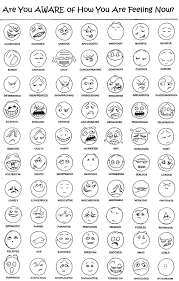
Feelings

A friend was talking today about this sheet. Over the years I have worked hard to better understand my own feelings, and have worked with many others as they got to know their own better.

Something that comes so naturally can be so distorted when you experience trauma, neglect and abuse. Not knowing how you are feeling, carrying feelings of others due to damaged boundaries, blaming others for your own feelings, and the frozen energy of your traumatized feelings stuck in the Body is a spiritual crisis, to which dishonesty to others becomes the only way to live day to day. Especially dishonesty by omission.

I came from a don't talk, don't trust, don't feel family system. Today I try to own and identify my own feelings. Im still not as good at it as I want to be. When my boys have feelings, I listen, when they are in pain , I hold them, no matter what it is that has happened. In my house it is ok to feel angry, sad, lonely, shame, guilt, love , joy and pain. All feelings are ok, all feelings matter. Sometimes feelings are not facts, but its is still a fact I am having the feeling and expressing it and getting my reality checked supported, and changed if necessary, is essential to my wellbeing.


I have come to far along the path to stop now. Tonight I was in the company of men , in a heart circle, with men that are on the same path.
I am grateful I have found my tribe. I feel Love and Joy/ Pain. (Thank you Pia Mellody for the beautiful melding of those two words)
Here's to those that are Trudging the Road to your Happy Destiny)

Monday, 29 August 2016

Pia Mellody on Human Relationships

This video is an old favourite of mine. I just suggested it to a client. 
Relationships are so difficult when you come from trauma. Our ultra sensitivity due to lack of inherent worth. The difficulty to differentiate realities between what's mine and what's the others. 
Th difficulty to own my reality and needs and wants and share them moderately .
Under stress to stop the locus and focus bring on the other person. To turn the radar off and the X-ray machine on and come back into my own integrity .
Thank you to  all the pioneer teachers that went out on limbs to bring us their truth.
https://youtu.be/DorV2Og0e00

Sunday, 10 July 2016

Adult Children of Alcoholics forst Sydney Unity Day!

There is a lot of Buzz about this Unity Day in Sydney.
ACA 1st Anniversary Unity Day
July 17, 2016, 9am - 5pm
McMahons Point Community Centre
165 Blues Point Rd, McMahons Point NSW 2196 Australia.
If you have come from any dysfunctional -less than nurturing or stressed parenting, then there could be some Gold in this fellowship
I look forward to presenting the workshop on Pia Mellody's concept of Re-parenting. It has been an essential life changing concept to know how to identify when I am in the symtoms of my trauma. To connect with the Wounded Child and learn how to nurture, support and connect instead of going to the Adaptions and criticize , abandon and neglect myself, continuing the abandonment and Toxic shaming of my childhood.
One of my favourite talks Pia has on record is titled Mapping your Recovery, and it is this talk she gave at and ACOA conference that I will be drawing on for this presentation through my own personal experience. You can purchase this MP3 from the Meadows, Treatment Center, Arizona, USA.
ACOA started with working with Adults from Alcoholic Family systems, however with what we know now about all addictions impacting the same rewards system in the brain, as an affect regulator to cope with attachment issues from developmental trauma , neglect and abuse, it opens up the wonderful tools of Adult Children of Alcoholics to be useful to all folks that grew up in a dsyfunctioning family system. Anything that gets you half an inch closer to God ( your Miracle) (Your core self) Take it. Look forward to seeing you there! Please share this post and flyer with anyone you think might benefit

Tuesday, 24 May 2016

Dealing with Trauma!


Have been training folks over the last two days about Underlying trauma and addiction. I have shared to all who will listen about the great work of San Francisco Psychotherapist Pete Walker. Here is a blog from his website. Hope it helps those who relate.

Flashbask Management in Treatment of Complex PTSD
The East Bay Therapist, Sept/Oct 2005
A significant percentage of adults who suffered ongoing abuse or neglect in childhood suffer from Complex Post Traumatic Stress Disorder. One of the most difficult features of this type of PTSD is extreme susceptibility to painful emotional flashbacks. Emotional flashbacks are sudden and often prolonged regressions ('amygdala hijackings') to the frightening circumstances of childhood. They are typically experienced as intense and confusing episodes of fear and/or despair - or as sorrowful and/or enraged reactions to this fear and despair. Emotional flashbacks are especially painful because the inner critic typically overlays them with toxic shame, inhibiting the individual from seeking comfort and support, isolating him in an overwhelming and humiliating sense of defectiveness.
Because most emotional flashbacks do not have a visual or memory component to them, the triggered individual rarely realizes that she is re-experiencing a traumatic time from childhood. Psychoeducation is therefore a fundamental first step in the process of helping clients understand and manage their flashbacks. Most of my clients experience noticeable relief when I explain PTSD to them. The diagnosis seems to reverberate deeply with their intuitive understanding of their suffering. When they understand that their sense of overwhelm initially arose as an instinctual response to truly traumatic circumstances, they begin to shed the awful belief that they are crazy, hopelessly oversensitive, and/or incurably defective.
Flashbacks strand clients in the feelings of danger, helplessness and hopelessness of their original abandonment, when there was no safe parental figure to go to for comfort and support. Hence, Complex PTSD is now accurately being identified by many as an attachment disorder. Flashback management therefore needs to be taught in the context of a safe relationship. Clients need to feel safe enough with the therapist to describe their humiliating experiences of a flashback, so that the therapist can help them respond more constructively to their overwhelm in the moment.
Without help in the moment, the client typically remains lost in the flashback and has no recourse but to once again fruitlessly reenact his own particular array of primitive, self-injuring defenses to what feel like unmanageable feelings. I find that most clients can be guided to see the harmfulness of these previously necessary, but now outmoded, defenses as misfirings of their fight, flight, freeze, or fawn responses. These misfirings then, cause dysfunctional warding off of feelings in four different ways:
1. fighting or over-asserting one's self with others in narcissistic and entitled ways such as misusing power or promoting excessive self-interest;
2.fleeing obsessive-compulsively into activities such as workaholism, sex and love addiction, or substance abuse (uppers');
3.freezing in numbing, dissociative ways such as sleeping excessively, over-fantasizing, or tuning out with TV or medications ('downers');
4.fawning in self-abandoning and obsequious codependent relating. (The fawn response to trauma is delineated in my earlier article on "Codependency and Trauma" in The East Bay Therapist, Jan/Feb 03).
As clients learn that their originally helpful defenses now needlessly hinder them, they can begin to replace them with the anxiolytic and therapeutic responses to flashbacks that are outlined and listed at the end of this article. I introduce this phase of the work by giving the client a copy of this list of cognitive, affective, somatic and behavioral techniques to use as a toolbox outside of the session. These tools are also elaborated ongoingly in our sessions. I continually notice that the clients who acquire the most recovery are those who carry the list with them or post it up conspicuously at home until they are thoroughly conversant with it.
As clients begin to derive benefit from responding more functionally to being triggered, there are more opportunities to work with their active flashbacks in session. In fact, it often seems that their unconscious desire for mastery 'schedules' their flashbacks to occur just prior to or during sessions. In helping them to achieve some mastery, my most ubiquitous intervention is helping them to deconstruct the outmoded alarmist tendencies of the inner critic. This is essential, as Donald Kalshed explicates throughout The Inner World of Trauma, because the inner critic grows rampantly in traumatized children and because the inner critic is the primary initiator of most flashbacks. The psychodynamics of this is that continuous abuse and neglect force the child's inner critic [superego] to overdevelop hypervigilance and perfectionism - hypervigilance to recognize and defend against danger, and perfectionism to try to win approval and safe attachment. Unfortunately, safety and attachment are rarely or never experienced. Hypervigilance progressively devolves into intense performance anxiety and perfectionism festers into a virulent inner voice that increasingly manifests self-hate, self-disgust and self-abandonment at every imperfection. Eventually the child grows up, but she is so dominated by feelings of danger, shame and abandonment, that she is unaware that adulthood now offers many new resources for achieving internal and external safety. She is stuck seeing the present as rife with danger as the past.
I sometimes think of this phase of the work as rescuing the client from the hegemony of the critic. Despite the negative connotation rescuing has in many circles, I believe there is an unmet childhood need for rescue that I help meet when I 'save' my client from the critic. like mom didn't save her from abusive dad, or like the neighborhood didn't rescue her from her alcoholic family. This rescue process then, is a gradual emancipation from self-alienation, and a gradual deliverance from the internalized parents who trigger the client with flashback-inducing catastrophizations and perfectionistic invectives. If no one shows the trauma-locked individual that extrication from the self-torturing processes of the critic is possible, he rarely learns to rescue himself. He may live forever without discovering that he now has a variety of helpful responses [detailed in the list below] available to him to resist the triggering and exacerbating dynamics of the critic.
Over the course of therapy, I often reframe flashbacks as messages from the wounded inner child about the denied or minimized traumas of childhood. In this vein I paint flashbacks as the inner child righteously clamoring for validation of past parental abuse and neglect. Flashbacks are the child pleading for unmet developmental needs to be met, none more important than the gradual awakening of a healthy sense of self-compassion and self-protection. This is fundamental to recovery because without self-compassion, clients rarely evolve any substantive self-care habits. Similarly, without reconnecting to the instinct of self-protection, clients rarely develop effective resistance to either internal or external abuse.
When clients get that their emotional storms are messages from an inner child who is still pining for a healthy inner attachment figure, they gradually become more self-accepting and less ashamed of their flashbacks, their imperfections and their overall affective experience. They understand that the lion's share of the energy of their intense emotional reactions in the present are actually appropriate but delayed reactions to various themes of their childhood abuse and neglect. As they learn to effectively assign this emotional energy to those events and perpetrators, they metabolize and work through these feelings in a trauma-resolving way. This in turn leads to a reduction of the emotional energy that fuels their flashbacks, and flashbacks in turn, become less frequent, less intense and less enduring. Eventually flashbacks can even begin to automatically invoke a sense of self-protection as soon as the individual realizes she is triggered. Eventually this can even happen at the moment of triggering, as well as just before encountering known triggers.
Some final words. I have seen so many of my clients respond well to this model, even those who 'only' suffered neglect, I have come to conceptualize Complex PTSD as being on a continuum of severity. In this vein, it seems that with enough neglect, certain children automatically over-identify with the superego and adopt an intense form of perfectionism that, via the critic's "not good enough, not pretty enough, not smart enough, not helpful enough, etc.," triggers them over and over into painful abandonment flashbacks every time they are remotely less than perfect or perfectly pleasing.
MANAGING FLASHBACKS
1. Say to yourself: "I am having a flashback". Flashbacks take us into a timeless part of the psyche that feels as helpless, hopeless and surrounded by danger as we were in childhood. The feelings and sensations you are experiencing are past memories that cannot hurt you now.
2.Remind yourself: "I feel afraid but I am not in danger! I am safe now, here in the present." Remember you are now in the safety of the present, far from the danger of the past.
3.Own your right/need to have boundaries. Remind yourself that you do not have to allow anyone to mistreat you; you are free to leave dangerous situations and protest unfair behavior.
4.Speak reassuringly to the Inner Child. The child needs to know that you love her unconditionally- that she can come to you for comfort and protection when she feels lost and scared.
5.Deconstruct eternity thinking: in childhood, fear and abandonment felt endless - a safer future was unimaginable. Remember the flashback will pass as it has many times before.
6.Remind yourself that you are in an adult body with allies, skills and resources to protect you that you never had as a child. (Feeling small and little is a sure sign of a flashback)
7.Ease back into your body. Fear launches us into 'heady' worrying, or numbing and spacing out.
[a] Gently ask your body to Relax: feel each of your major muscle groups and softly encourage them to relax. (Tightened musculature sends unnecessary danger signals to the brain)
[b] Breathe deeply and slowly. (Holding the breath also signals danger).
[c] Slow down: rushing presses the psyche's panic button.
[d] Find a safe place to unwind and soothe yourself: wrap yourself in a blanket, hold a stuffed animal, lie down in a closet or a bath, take a nap.
[e] Feel the fear in your body without reacting to it. Fear is just an energy in your body that cannot hurt you if you do not run from it or react self-destructively to it.
8.Resist the Inner Critic's Drasticizing and Catastrophizing:
[a] Use thought-stopping to halt its endless exaggeration of danger and constant planning to control the uncontrollable. Refuse to shame, hate or abandon yourself. Channel the anger of self-attack into saying NO to unfair self-criticism.
[b] Use thought-substitution to replace negative thinking with a memorized list of your qualities and accomplishments
9. Allow yourself to grieve. Flashbacks are opportunities to release old, unexpressed feelings of fear, hurt, and abandonment, and to validate - and then soothe - the child's past experience of helplessness and hopelessness. Healthy grieving can turn our tears into self-compassion and our anger into self-protection.
10. Cultivate safe relationships and seek support. Take time alone when you need it, but don't let shame isolate you. Feeling shame doesn't mean you are shameful. Educate your intimates about flashbacks and ask them to help you talk and feel your way through them.
11. Learn to identify the types of triggers that lead to flashbacks. Avoid unsafe people, places, activities and triggering mental processes. Practice preventive maintenance with these steps when triggering situations are unavoidable.
12. Figure out what you are flashing back to. Flashbacks are opportunities to discover, validate and heal our wounds from past abuse and abandonment. They also point to our still unmet developmental needs and can provide motivation to get them met.
13. Be patient with a slow recovery process: it takes time in the present to become un-adrenalized, and considerable time in the future to gradually decrease the intensity, duration and frequency of flashbacks. Real recovery is a gradually progressive process (often two steps forward, one step back), not an attained salvation fantasy. Don't beat yourself up for having a flashback.
http://www.pete-walker.com

Tuesday, 10 May 2016

Recovery Icon John Bradshaw passes away.

Well I am just l learning this news. God rest his soul and support the hearts of Family and close friends . 
The loss must be indescribable .
To the rest of the recovery community we have lost an icon. A man who humbly stated that he stood on the shoulders of giants, only to become a true giant himself. His illumination on the damage of dysfunction to child development was ahead of its time. 
The interpersonal neurobiologists of today's fame owe an enormous amount to Bradshaw. He was at the coalface, and his concept of Toxic Shame and Healing the Shame that Binds You reconnected many souls.
His acknowledgment of the Shame core and the passionate healing that comes through his work in Homecoming restored hope to generations to come that they could interrupt the pattern of generational abuse.
 The Family series was ground breaking and life saving, always impressed me that it was shown in prison throughout the USA to all those second child scapegoats.
 
I have his voice regularly in my head and as a survivor of childhood trauma  and being in recovery from many addictions, some for over 30 years now, I am in debt to Bradshaw for my life. He will always be one of the voices within me that leads me to my true north.
You will be missed you beautiful man. 


Tuesday, 25 August 2015

Trudging the Road to your Happy Destiny. PTSD and CPTSD Grand Round for South Pacific Private.

"Our bodies don't run from danger because we're afraid - rather, we're afraid because our bodies run."
- William James 1884.


Today's Grand Round went really well. There was a great group of professionals and good presence in the room. I was to present with our Medical Superintendent, Dr Ben Teoh. Ben has many years experience working with Complex Trauma and PTSD from shock Trauma, and gave the opening presentation.
Dr Teoh covered comprehensively the DSM IV & V definitions of Trauma and highlighted their deficiency when dealing with clients symptoms who present with Complex Trauma issues as a result of Childhood Trauma.  He presented statistics from the Adverse Childhood experience study, and linked it to Dr Bessel Van Der Kolk's proposed Developmental Trauma Disorder diagnostic criteria, making the point that Developmental Trauma is still very prevalent in families today.

 I had the pleasure to then link SPP's treatment model , and how we have been incorporating the Body Focused Treatment modalities  of Pat Ogden, Peter Levine, Bessel Van Der Kolk, Dr Allan Schore and Dr Stephen Porges and how they have been very complimentary to Pia Mellody model of developmental immaturity that we have been working form at South Pacific Private.

For many years we have addressed the two recoveries that are suggested by Pia Mellody at the Meadows Arizona at SPP. Firstly, the recovery from our Secondary Symptoms , especially the Addiction Issues, Mental Health Issues and Physical illness. The the second recovery is from our history. The Developmental Trauma that has left a lasting affect predisposing us towards the secondary symptoms. For recovery to take place we need to work on both fronts. Fortunately this day and age there are more resources than before to seek support for addiction and mental health issues, but the recovery from our history, and the immaturity it leaves us to live in gets largely overlooked. Leaving clients in states of Negative Control issues, Resentment and Rage issuesSpirituality issues, Enmeshment and Avoidance issues, deep problems with dishonesty, for example not being able to truly share their reality with others with out feeling any Toxic Shame. All this protected by defense mechanisms that initially saved us at the time of the trauma, but leaving us in our adult life disconnected from our viscera, in a way inhibits any connection with self and others. Also leaving us with regulation issues that promote the trigger a pathological relationship with mood altering substances or behaviors.
Fortunately treatment for both is available at a level that we now have evidence leads to change in the brain in regards to neuroplasticity and the malleability of the existing structure. Extraordinary.

It does not mean that it is easy. As a survivor myself I was encouraged reading Pete Walkers book "Complex PTSD, from Surviving to Thriving". I resonated with his shared experience. For many years I have used walking and stretching to get me in touch with the Body that I disconnected from in childhood due to the Toxic Shame and visceral discomfort I felt being connected to the stress when I felt triggered. It has always felt better when I was finished, but the act of doing  it always took commitment. I use to think it was case I was unmotivated or lazy.
 It was pointed out to me by a mentor that I was the most unlaziest person they had ever met, and they suggested it was fear and shame as I was connected to myself. They were right.

These days when I am travelling well, I do it, feel better after it and see it and mindfulness as essentials to my well being and CPTSD recovery, and part of my 11th Step practice that is my insurance policy against relapsing. Pia Mellody quoted the phrase that in recovery we are " Trudging the road to our happy destiny". That is an apt saying, however words will never encapsulate the reality of the complex difficultly of trauma recovery. "John Bradshaw stated that when we experienced the Toxic Shame core firing in an attack , that it was the "Intolerable experience of being". If you let that statement wash through you, examine it at depth, that comes closer. 

In we attempt the two recoveries, it will get worse before it gets better, but it will get better, in most cases better than you could ever know.