Showing posts with label Menswork. Show all posts

Sunday, 18 September 2016

Feelings

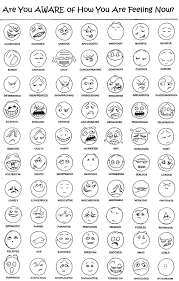
A friend was talking today about this sheet. Over the years I have worked hard to better understand my own feelings, and have worked with many others as they got to know their own better.

Something that comes so naturally can be so distorted when you experience trauma, neglect and abuse. Not knowing how you are feeling, carrying feelings of others due to damaged boundaries, blaming others for your own feelings, and the frozen energy of your traumatized feelings stuck in the Body is a spiritual crisis, to which dishonesty to others becomes the only way to live day to day. Especially dishonesty by omission.

I came from a don't talk, don't trust, don't feel family system. Today I try to own and identify my own feelings. Im still not as good at it as I want to be. When my boys have feelings, I listen, when they are in pain , I hold them, no matter what it is that has happened. In my house it is ok to feel angry, sad, lonely, shame, guilt, love , joy and pain. All feelings are ok, all feelings matter. Sometimes feelings are not facts, but its is still a fact I am having the feeling and expressing it and getting my reality checked supported, and changed if necessary, is essential to my wellbeing.


I have come to far along the path to stop now. Tonight I was in the company of men , in a heart circle, with men that are on the same path.
I am grateful I have found my tribe. I feel Love and Joy/ Pain. (Thank you Pia Mellody for the beautiful melding of those two words)
Here's to those that are Trudging the Road to your Happy Destiny)

Friday, 8 July 2016

Facing Addiction


Facing Addiction
Dr Patrick Carnes
Dr Stephanie Carnes
Dr John Baily
Patrick Carnes and the International Institute of Addiction Professionals are simply the world’s premier Addiction Treatment organisation. A lifetimes work by Patrick has produced some of the best resources to help addicts and their families confront addiction head on, and give them the best chance to not only break free from its grips, but gain the spiritual awakening that is identified in the 12th step of the Alcoholics Anonymous program.
Following is some notes from the first chapter of Facing Addiction, and over the coming months I will video blog / webinar and blog the next six tasks. Please buy the books from IItap, and the Gentle Path Press. Whether you are a practitioner, recovering person or Family Member, the 30-point competency based recovery Plan that Patrick Carnes has created is available through Facing Addiction, Facing the Shadow and Facing Heartbreak and followed up with the Recovery Zone books 1,2, &3.

“Addiction often begins simply: reality becomes too much
to bear, so we try to escape it with drugs and alcohol” Patrick Carnes

Mental health is a commitment to Reality no matter what the cost! M Scott Peck.

THREE systems addicts tend to come from
1.       Alcoholism/addiction is present in the family. The elephant in the living room no one talks about. Looking at addiction becomes normal. We learn to look at Addiction and not see it.
2.        Rigid/Authoritarian family systems-system is to stable to the point of suffocation. Too strict, Too much discipline. Too many unbendable rules. Too many expectations for perfection. Success in a rigid family means doing what they want. Normal Development does not happen. In adolescence there are two choices. Perfection or rebellion.
3.       Chaotic: System is too unstable. Expectations change so much that the child becomes confused, about who they are!
Note: All result in a distrust of authority, a poor sense of self, and both positions Distort Reality.

Disengaged Families: There is little sharing- no development of “Sharing “skills. No experience of being vulnerable, of risking anything about themselves. Learn to trust no-one but themselves.  Results in self-delusion, which becomes hard to break. Secrets become more potent than reality.

Enmeshed Families: Children learn to focus on the needs of others at their own expense. Family members are “very” dependant on each other. No sense of boundaries between realities. No strong sense of self develops. Not capable of honest sharing as there is no sense of core self to share with others. The intimacy therefore, or closeness they feel is a false closeness
Trauma and Abuse: Likely to have experienced Trauma and abuse as children. Either overt or covert. Physical, Sexual, Emotional, Intellectual and Spiritual.  Abuse and Neglect lead to a distrust of others and further distorts reality. Children who are neglected conclude they are not valuable. They live with a High Level of Anxiety because no one teaches them basic life skills or provides for basic needs. (Depending on the extreme nature of the abuse, as perceived by the victim, would also determine whether the vagal system was activated and therefore the Hypo-arousal or Hyper-arousal   responses of the nervous system Occur-Fight /Flight/Freeze.
Children find ways to deaden the anxiety they feel. Either they find alcohol or drugs at an early age (either illegal or prescribed) Other behaviours can be used to dull Anxiety-Sex, Food, Gaming, Fantasy etc.
Abuse victims tend to distort reality: They can over react or under respond to life problems. Being so terrified makes them reactive. They compartmentalize, splitting reality acknowledging some parts, denying and deluding others. Dr Jekyll and Mr Hyde was a good account of phenomena.
Abuse victims tend to minimize the impact of abuse. “It was not that bad” “It did not hurt me much” This adds another layer of reality distortion. Addicts can end up with so much reality distortion that we become comfortable with it.
When reality hits, it can be a shock. The world collides. Addicts can then be stunned at this delusion ability. This is why in the beginning of recovery we must look at this Denial.
Two Challenges:
1: Must be honest with yourself.
2: Must be honest with those who can help you.
Three activities that can help you focus on reality:
1.You must list what you think your problems are.
2.  As you review these problems, notice what secrets you have.
3. What excuses and rationales do you have to justify your addictive behaviour?
Write these meeting the two Challenges-Be honest with yourself, then be honest with someone who can help you. It’s your chance to raise the bottom, break denial patterns and the beginning of real change, not just another promises to self!
Now that we have written our three lists and shared them, let’s look at denial!
*List all the reasons you harbour that tell you that you do not need Therapy/group work/12 step meetings to deal with your addiction. After this list give examples of the types of denial you might have:
·       Global Thinking
·       Rationalisation
·       Minimizing
·       Comparisons
·       Uniqueness (sometimes terminal!)
·       Avoid through distractions
·       Avoiding by Omission
·       Blaming
·       Intellectualizing
·       Manipulative Behaviours
·       Crazy Making behaviours
·       Seduction.
·       Compartmentalizing

Remember
There Really is no excuse
Now is the time to be accountable

List all the people that have been affected by your behaviour and how have they been affected.  Share this list honestly with someone you trust. Therapist or sponsor preferred.
 Now with all we have just done, you have confronted the coalface of the addiction head on. Before we go further into understanding the addiction cycle itself we must breakthrough denial and delusion that we even have this disease. It has been said about alcoholism and addictions is that it is the only disease that tells you that you haven’t got a disease. So essentially this is a step zero. Welcome to the start of your recovery. As you walk forward remember to:
1.       Reach out and get support
2.       An addict alone is in Band Company
3.       You cannot save your ass and your face at the same time.
4.       Don’t give up no matter what!

“If you want to take the island, burn the boat” Anthony Robbins
Friday, 27 May 2016

Indecision and CPTSD

Thank you Lex Mega for sending this through today . Hazeldens Mens reading. I was lost in rigid thinking trying to decide whether to ride the Brass Monkey run or stay focused where my intuition was leading me today. 
Indecision had been a real symptom of my CPTSD . Being disconnection from my centre means the smallest of decisions sometimes become overwhelming and then there is no way out when the implicit feeling state hits and I feel that no matter what do from this point I will not be ok . 
Just for today, the best I can do is nurture the boy within, and trust the man I have become to make the decisions, and if I don't like what I choose, I can always choose again. 
Breathe, hand it over , Carry on.
• MAY 28 •

I sidestep the either/or choices of logic and choose both.

—Ken Feit

Men like us have often had a lifestyle guided by either/or logic. We think we must either conquer the challenge we see before us or we will be failures. We think loved ones must either meet our needs or they do not love us. We think we must either be perfect or we are unacceptable.

Let us now step back from the rigidity of such unhealthy logic. Much of human experience and many answers to our problems don't come in neatly tied packages. As we learn to think and feel in more flexible ways, we find life gets better. Using our intuition at times, rather than always following rigid rules for life, improves the recipe. The arrogance of our thought process has sometimes told us we had the answer, but it closed us to the growth which only comes by trusting our feelings. If we make mistakes, we can learn from them and go on. Many of the most ingenious inventions came not by rigidly following rules, but by following an inner feeling.

Today, I will be open to more possibilities in my thinking.

Tuesday, 24 May 2016

Dealing with Trauma!


Have been training folks over the last two days about Underlying trauma and addiction. I have shared to all who will listen about the great work of San Francisco Psychotherapist Pete Walker. Here is a blog from his website. Hope it helps those who relate.

Flashbask Management in Treatment of Complex PTSD
The East Bay Therapist, Sept/Oct 2005
A significant percentage of adults who suffered ongoing abuse or neglect in childhood suffer from Complex Post Traumatic Stress Disorder. One of the most difficult features of this type of PTSD is extreme susceptibility to painful emotional flashbacks. Emotional flashbacks are sudden and often prolonged regressions ('amygdala hijackings') to the frightening circumstances of childhood. They are typically experienced as intense and confusing episodes of fear and/or despair - or as sorrowful and/or enraged reactions to this fear and despair. Emotional flashbacks are especially painful because the inner critic typically overlays them with toxic shame, inhibiting the individual from seeking comfort and support, isolating him in an overwhelming and humiliating sense of defectiveness.
Because most emotional flashbacks do not have a visual or memory component to them, the triggered individual rarely realizes that she is re-experiencing a traumatic time from childhood. Psychoeducation is therefore a fundamental first step in the process of helping clients understand and manage their flashbacks. Most of my clients experience noticeable relief when I explain PTSD to them. The diagnosis seems to reverberate deeply with their intuitive understanding of their suffering. When they understand that their sense of overwhelm initially arose as an instinctual response to truly traumatic circumstances, they begin to shed the awful belief that they are crazy, hopelessly oversensitive, and/or incurably defective.
Flashbacks strand clients in the feelings of danger, helplessness and hopelessness of their original abandonment, when there was no safe parental figure to go to for comfort and support. Hence, Complex PTSD is now accurately being identified by many as an attachment disorder. Flashback management therefore needs to be taught in the context of a safe relationship. Clients need to feel safe enough with the therapist to describe their humiliating experiences of a flashback, so that the therapist can help them respond more constructively to their overwhelm in the moment.
Without help in the moment, the client typically remains lost in the flashback and has no recourse but to once again fruitlessly reenact his own particular array of primitive, self-injuring defenses to what feel like unmanageable feelings. I find that most clients can be guided to see the harmfulness of these previously necessary, but now outmoded, defenses as misfirings of their fight, flight, freeze, or fawn responses. These misfirings then, cause dysfunctional warding off of feelings in four different ways:
1. fighting or over-asserting one's self with others in narcissistic and entitled ways such as misusing power or promoting excessive self-interest;
2.fleeing obsessive-compulsively into activities such as workaholism, sex and love addiction, or substance abuse (uppers');
3.freezing in numbing, dissociative ways such as sleeping excessively, over-fantasizing, or tuning out with TV or medications ('downers');
4.fawning in self-abandoning and obsequious codependent relating. (The fawn response to trauma is delineated in my earlier article on "Codependency and Trauma" in The East Bay Therapist, Jan/Feb 03).
As clients learn that their originally helpful defenses now needlessly hinder them, they can begin to replace them with the anxiolytic and therapeutic responses to flashbacks that are outlined and listed at the end of this article. I introduce this phase of the work by giving the client a copy of this list of cognitive, affective, somatic and behavioral techniques to use as a toolbox outside of the session. These tools are also elaborated ongoingly in our sessions. I continually notice that the clients who acquire the most recovery are those who carry the list with them or post it up conspicuously at home until they are thoroughly conversant with it.
As clients begin to derive benefit from responding more functionally to being triggered, there are more opportunities to work with their active flashbacks in session. In fact, it often seems that their unconscious desire for mastery 'schedules' their flashbacks to occur just prior to or during sessions. In helping them to achieve some mastery, my most ubiquitous intervention is helping them to deconstruct the outmoded alarmist tendencies of the inner critic. This is essential, as Donald Kalshed explicates throughout The Inner World of Trauma, because the inner critic grows rampantly in traumatized children and because the inner critic is the primary initiator of most flashbacks. The psychodynamics of this is that continuous abuse and neglect force the child's inner critic [superego] to overdevelop hypervigilance and perfectionism - hypervigilance to recognize and defend against danger, and perfectionism to try to win approval and safe attachment. Unfortunately, safety and attachment are rarely or never experienced. Hypervigilance progressively devolves into intense performance anxiety and perfectionism festers into a virulent inner voice that increasingly manifests self-hate, self-disgust and self-abandonment at every imperfection. Eventually the child grows up, but she is so dominated by feelings of danger, shame and abandonment, that she is unaware that adulthood now offers many new resources for achieving internal and external safety. She is stuck seeing the present as rife with danger as the past.
I sometimes think of this phase of the work as rescuing the client from the hegemony of the critic. Despite the negative connotation rescuing has in many circles, I believe there is an unmet childhood need for rescue that I help meet when I 'save' my client from the critic. like mom didn't save her from abusive dad, or like the neighborhood didn't rescue her from her alcoholic family. This rescue process then, is a gradual emancipation from self-alienation, and a gradual deliverance from the internalized parents who trigger the client with flashback-inducing catastrophizations and perfectionistic invectives. If no one shows the trauma-locked individual that extrication from the self-torturing processes of the critic is possible, he rarely learns to rescue himself. He may live forever without discovering that he now has a variety of helpful responses [detailed in the list below] available to him to resist the triggering and exacerbating dynamics of the critic.
Over the course of therapy, I often reframe flashbacks as messages from the wounded inner child about the denied or minimized traumas of childhood. In this vein I paint flashbacks as the inner child righteously clamoring for validation of past parental abuse and neglect. Flashbacks are the child pleading for unmet developmental needs to be met, none more important than the gradual awakening of a healthy sense of self-compassion and self-protection. This is fundamental to recovery because without self-compassion, clients rarely evolve any substantive self-care habits. Similarly, without reconnecting to the instinct of self-protection, clients rarely develop effective resistance to either internal or external abuse.
When clients get that their emotional storms are messages from an inner child who is still pining for a healthy inner attachment figure, they gradually become more self-accepting and less ashamed of their flashbacks, their imperfections and their overall affective experience. They understand that the lion's share of the energy of their intense emotional reactions in the present are actually appropriate but delayed reactions to various themes of their childhood abuse and neglect. As they learn to effectively assign this emotional energy to those events and perpetrators, they metabolize and work through these feelings in a trauma-resolving way. This in turn leads to a reduction of the emotional energy that fuels their flashbacks, and flashbacks in turn, become less frequent, less intense and less enduring. Eventually flashbacks can even begin to automatically invoke a sense of self-protection as soon as the individual realizes she is triggered. Eventually this can even happen at the moment of triggering, as well as just before encountering known triggers.
Some final words. I have seen so many of my clients respond well to this model, even those who 'only' suffered neglect, I have come to conceptualize Complex PTSD as being on a continuum of severity. In this vein, it seems that with enough neglect, certain children automatically over-identify with the superego and adopt an intense form of perfectionism that, via the critic's "not good enough, not pretty enough, not smart enough, not helpful enough, etc.," triggers them over and over into painful abandonment flashbacks every time they are remotely less than perfect or perfectly pleasing.
MANAGING FLASHBACKS
1. Say to yourself: "I am having a flashback". Flashbacks take us into a timeless part of the psyche that feels as helpless, hopeless and surrounded by danger as we were in childhood. The feelings and sensations you are experiencing are past memories that cannot hurt you now.
2.Remind yourself: "I feel afraid but I am not in danger! I am safe now, here in the present." Remember you are now in the safety of the present, far from the danger of the past.
3.Own your right/need to have boundaries. Remind yourself that you do not have to allow anyone to mistreat you; you are free to leave dangerous situations and protest unfair behavior.
4.Speak reassuringly to the Inner Child. The child needs to know that you love her unconditionally- that she can come to you for comfort and protection when she feels lost and scared.
5.Deconstruct eternity thinking: in childhood, fear and abandonment felt endless - a safer future was unimaginable. Remember the flashback will pass as it has many times before.
6.Remind yourself that you are in an adult body with allies, skills and resources to protect you that you never had as a child. (Feeling small and little is a sure sign of a flashback)
7.Ease back into your body. Fear launches us into 'heady' worrying, or numbing and spacing out.
[a] Gently ask your body to Relax: feel each of your major muscle groups and softly encourage them to relax. (Tightened musculature sends unnecessary danger signals to the brain)
[b] Breathe deeply and slowly. (Holding the breath also signals danger).
[c] Slow down: rushing presses the psyche's panic button.
[d] Find a safe place to unwind and soothe yourself: wrap yourself in a blanket, hold a stuffed animal, lie down in a closet or a bath, take a nap.
[e] Feel the fear in your body without reacting to it. Fear is just an energy in your body that cannot hurt you if you do not run from it or react self-destructively to it.
8.Resist the Inner Critic's Drasticizing and Catastrophizing:
[a] Use thought-stopping to halt its endless exaggeration of danger and constant planning to control the uncontrollable. Refuse to shame, hate or abandon yourself. Channel the anger of self-attack into saying NO to unfair self-criticism.
[b] Use thought-substitution to replace negative thinking with a memorized list of your qualities and accomplishments
9. Allow yourself to grieve. Flashbacks are opportunities to release old, unexpressed feelings of fear, hurt, and abandonment, and to validate - and then soothe - the child's past experience of helplessness and hopelessness. Healthy grieving can turn our tears into self-compassion and our anger into self-protection.
10. Cultivate safe relationships and seek support. Take time alone when you need it, but don't let shame isolate you. Feeling shame doesn't mean you are shameful. Educate your intimates about flashbacks and ask them to help you talk and feel your way through them.
11. Learn to identify the types of triggers that lead to flashbacks. Avoid unsafe people, places, activities and triggering mental processes. Practice preventive maintenance with these steps when triggering situations are unavoidable.
12. Figure out what you are flashing back to. Flashbacks are opportunities to discover, validate and heal our wounds from past abuse and abandonment. They also point to our still unmet developmental needs and can provide motivation to get them met.
13. Be patient with a slow recovery process: it takes time in the present to become un-adrenalized, and considerable time in the future to gradually decrease the intensity, duration and frequency of flashbacks. Real recovery is a gradually progressive process (often two steps forward, one step back), not an attained salvation fantasy. Don't beat yourself up for having a flashback.
http://www.pete-walker.com

Tuesday, 10 May 2016

Recovery Icon John Bradshaw passes away.

Well I am just l learning this news. God rest his soul and support the hearts of Family and close friends . 
The loss must be indescribable .
To the rest of the recovery community we have lost an icon. A man who humbly stated that he stood on the shoulders of giants, only to become a true giant himself. His illumination on the damage of dysfunction to child development was ahead of its time. 
The interpersonal neurobiologists of today's fame owe an enormous amount to Bradshaw. He was at the coalface, and his concept of Toxic Shame and Healing the Shame that Binds You reconnected many souls.
His acknowledgment of the Shame core and the passionate healing that comes through his work in Homecoming restored hope to generations to come that they could interrupt the pattern of generational abuse.
 The Family series was ground breaking and life saving, always impressed me that it was shown in prison throughout the USA to all those second child scapegoats.
 
I have his voice regularly in my head and as a survivor of childhood trauma  and being in recovery from many addictions, some for over 30 years now, I am in debt to Bradshaw for my life. He will always be one of the voices within me that leads me to my true north.
You will be missed you beautiful man. 


Sunday, 1 November 2015

Mothers


Well tonight, Movember Day One, just finished a Country wide Skype mens meeting. The house is quiet here, I'm exhausted after staying up for the Wallabies. However, the value of deep sharing from grown man to grown man, from the heart, is a currency of Kings! My mental Health and well being has been stabilized and foundationalized by fostering relationships with men, in a way that my fathers generation was not able to . Viva the Evolution!

Tonight's topic Mothers, I shared about my alcoholic birth Mother , my adopted mother and her challenges of dealing with mental illness, and my wife, who has health challenges now, but is one of the most deeply loving spirit-filled beings I have ever met. Our two beautiful boys have an anchor in them created by her commitment, every minute of everyday to this family.
She is my Queen Scout.
I am grateful to have met with and stayed in contact with my birth mother. I am grateful to recovery that I stayed through the grief process of growing up with my adopted mother and the impact of the trauma of mental illness, to now have healed from both our pasts and I have a loving relationship with my mum. She did the best with what she had, and he was given a rough start to. We have that in common, but we have both changed the family legacy.

I have a poem I will sign off on tonight , I wrote about being the surrogate spouse as the eldest to my mother, here it is. I was written years ago, but it is still important, that work and the wound.

A Gift from the Cook.

How long has my worth been determined by others?
My need to be needed,
Reflects my self perception.
It seems to be the only substance to fill this hole.
To make me complete.
Yet I have always been empty.
The approval have always been an illusionary filler,
For I remain always trying to fill the same hole.

Showing people I was worthy of their need.
And keeping them needy.
For if they grew beyond that place,
What would become of me?

To my mother I was a possession.
She needed me to need her,
So she could feel special,
Whole and complete.
And I grew to need her love, approval and protection.
Yet, there was something wrong.
An anger or resentment,
At my acquired need.
Like it sucked at some life blood that did not exist.
A hunger that was induced,
But no food could be supplied.


And as the years have past,
I have lived with this constant hunger.
To be needed or not feel complete.
And for the women of my life,
They served the same meal,
And for a while I enjoyed.
But somewhere the food soured,
And the hole inside grew to the size of a cavern.

My wife found she needed herself more and left.
My mother just grew tired,
And occasionally just turned off the stove.
And now I am alone,
Me and my need to be needed.

And for my father,
Who sat for my entire life
A spectator to this feast,
Resented me.
For I ate his food, from his wife,
And many times he went hungry.

And now we live many universes apart,
And speak very different tongues,
Both with a hole,
A gift from the cook.

S.J.S


Friday, 30 October 2015

MOvember and MOVEmber-Time for a chnage


Tomorrow I start my MOvember Campaign( Growing a MO to raise awareness for Men's Health) and MOVEmber ( Moving everyday to raise awareness of the importance of Physical fitness and a healthy Body and Mind!)
The first one is my vocation and passion, I have been working in the Mental Health ,Addictions and Men's Work field for nearly 30 years.
The second one, well, that's been a life's journey of ups and downs. At 52 I am someone who needs to confront my own issues regarding , health and middle age and work/ life / family/ passion balance and the resulting stress and relying on caffeine and sugar to cope and for energy to keep going when my own boundaries go awry. 
Being in Recovery has given me some quality problems. Problems that have been the gifts I would have only received being on the recovery road. Bustling loving family, exciting challenging heartfelt work, opportunity and creativity of being a poet, musician and playing music in a band, making records and touring. Also my own personal Therapy, spirituality and recovery program, to maintain and grow all takes time and effort.
When my father got ill and deteriorated over a year, and little Maverick was born, and I moved more into my vocational work and put the band off the road, the year seemed to trigger an anxiety I had not felt for along time. Now that it is nearly two years since dad has died, I have struggled to overcome that feeling, and food and caffeine gives me that false energy, but now it's costing me so much more than it's giving. I am an older father, and I want to be around for along time, fully fit and active for my boys. This means there needs to be change.
I became aware that it was becoming the patriarch in my Family. My work ,my role as a father and provider and my music had created a response in me I didn't expect. Archetypaly I understood it as a move from the Warrior energy into the King energy. It was literally taking my breathe away. Now it's time to face it and embrace it. MOVEmber is an opportunity to embrace a healthier life balance.
Please follow along my journey, donate please to a good cause, men's health. My MOvember campaign is outlined below.
Movember Campaign
Steve Stokes
I am excited to not only be MOvembering, I am also MOVEmbering!!!
The
first is to be growing and sporting a MO
to raise awareness of Men’s Mental Health issues , and my participation in MOVEember is to everyday day though increasing physical activity and improving my nutrition and lifestyle to raise awareness that the Mental Health issues or men can result in broader health issues , suicide and pre-mature death.

Check out the above page for daily blogs, pic’s and videos of my journey,  event details that I will be hosting and interviews with other men on the recovery road, sharing their insights and Tools
of the Recovery Trade

Events:
1.       Webinar: Title: Men , Mental Health Awareness and  Tools of the Recovery Trade!:  
When:  Wednesday 11th Nov  : Time: 7.45 pm Who: All Welcome!!!!!!!!!!!!
A man dies from Suicide every minute on this planet,  1 in 8 Aussie men will experience depression and 1 in 5 will experience Anxiety. Drug and Alcohol use, Pornography, Gambling , Nicotine, are all Mental Health issues in the form of Addictions and are on the increase. Childhood Trauma and its Post Traumatic Symptoms can cause a great deal of men to be unwell personally, and all of the above effects our ability to be Fathers, Sons and Husbands. In this webinar we will look at Tools for the Recovery Trade. How to identify, treat and heal from Mental Health Issues, and get our life back.

1. Inpatient Men’s Group South Pacific Private: Title: Facing the Fire: Men and  Anger.
Time: 2.30PM  4PM. Who: Inpatients Only
This group will look back at the resource Facing the Fire by USA John Lee and will present techniques to identify stress and feelings when they are building, and learn feel  to express our anger in healthy and safe way.

3.   2. Daily Blogs for MOvember campaign and daily Video blogs for MOVEmber. Check out my Movember page daily to donate, request information and content on Men’s Mental Health and have  be informed about all the antics my MO and MOVE is getting up to. I will be linking resources for mental health, books, webinars, YouTube lectures, covering diverse mental health subjects.